

This post may contain affiliate links. Please see our disclosure policy.
Flavored salt is one of those tiny things that makes everything you cook taste like you tried harder than you did. Infusing salt sounds like a project, but it’s really just stirring dried zest, petals, or spices into good flaky salt, and it takes about five minutes. I’ve been making these for years, and I keep four or five jars next to my stove at all times.
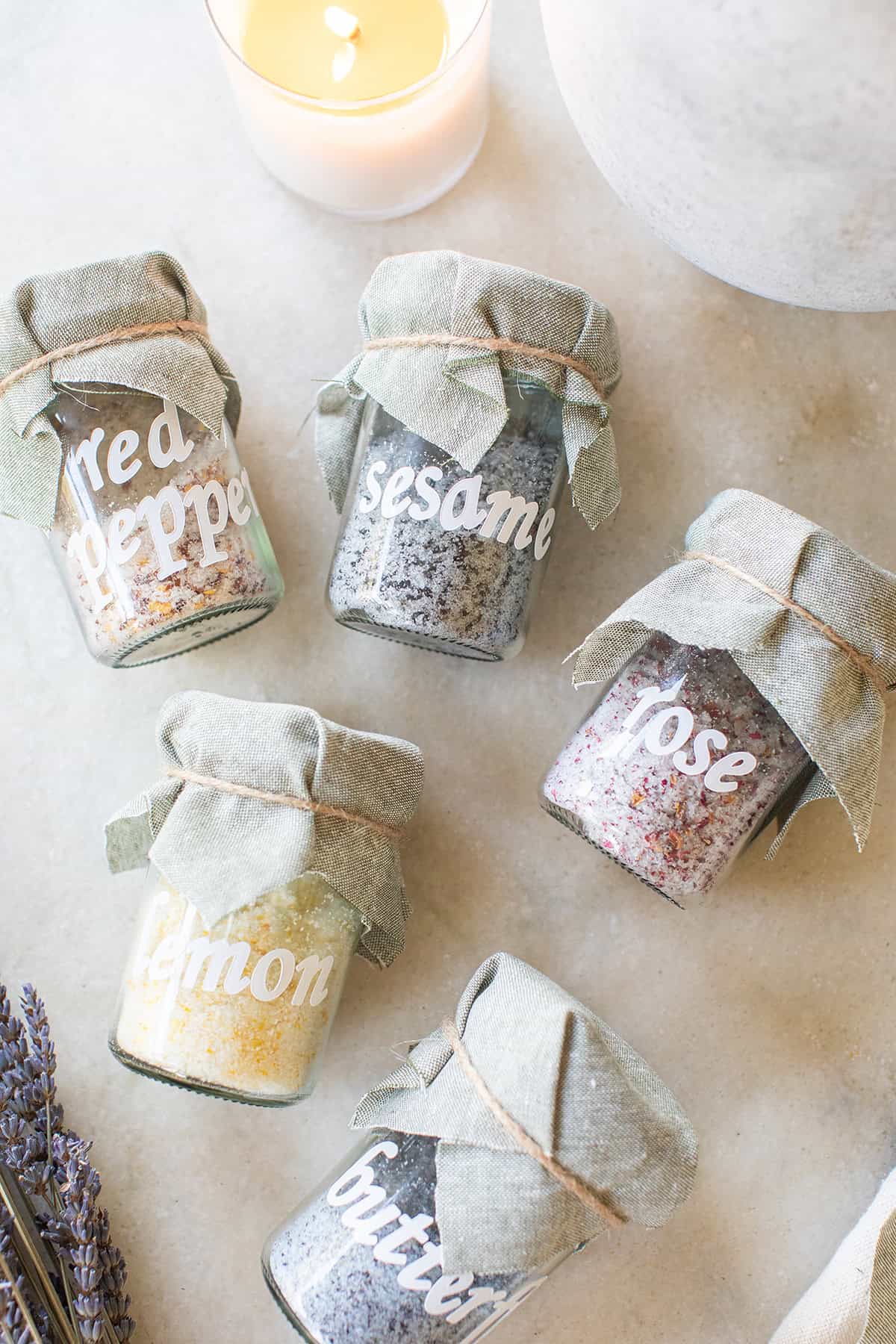
If you’ve made my infused sugar, infused salt is very similar! I use these on cocktails, desserts, and appetizer boards; they end up on nearly every party table I set, and they’re one of the prettiest homemade gifts you can give in jar.
Pin this now to find it later
Pin ItTable of Contents
- What Makes Flavored Salt Better Than Store Bought
- Flavored Salt Ingredients
- How to Make Flavored Salt
- Why Everything Has to Be Dry First
- 5 Flavored Salt Recipes
- How to Use Flavored Salt
- How to Package Flavored Salt for Gifts
- Eden’s Tips
- Flavored Salt FAQs
- More Easy Homemade Gifts
- How to Make Flavored Salt Recipe
What Makes Flavored Salt Better Than Store Bought
Ground herbs and spices lose their volatile oils quickly once they’re exposed to air, and that’s where the flavor lives. A blend that’s been on a shelf for a year is a shadow of what it was the week it was made.
When you make it yourself, you control three things that matter. You pick the salt, so you get the flaky texture that actually looks like something when you sprinkle it. You control the ratio, so you can go bolder or softer depending on what you’re using it for. And you’re using ingredients you dried this week, which means the first time you open the jar, it smells like the thing it’s supposed to be.
The whole process is stir, pulse, done. There’s no cooking, no technique to master, and nothing you can really ruin.
Flavored Salt Ingredients
You only need two things, and one of them is salt.
Flaky or coarse salt. This is a finishing salt, which means you’re sprinkling it on at the end, where people will see it and feel it. Maldon is my favorite because the flakes catch the light. Coarse sea salt and kosher salt both work beautifully and cost less. Skip fine table salt, because it disappears into whatever you put it on, and you lose the whole point.
Something dry to stir into it. Dried citrus zest, dried petals, seeds, spices, chili flakes, tea leaves. If it’s dry and flavorful, it will work.
The rule that governs all of this is the ratio, and once you know it, you can stop following recipes entirely. Use 1 to 2 teaspoons of flavoring for every 1/4 cup of salt. My recipes below run toward the higher end of that because I like them assertive, but if you’re improvising, start at 1 teaspoon and taste as you go.
How to Make Flavored Salt
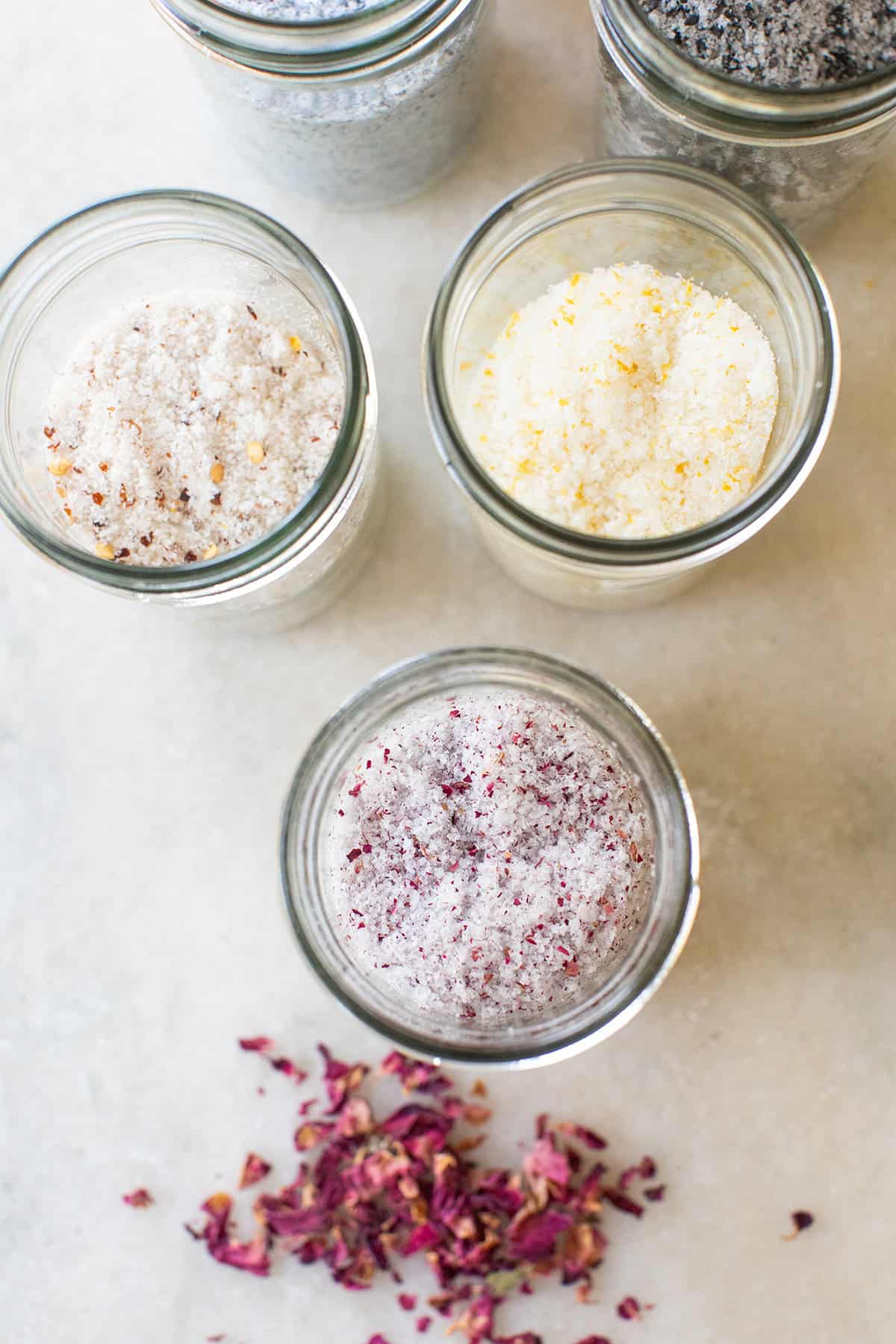
Put the salt and your dried flavoring in a food processor or blender. Pulse for about two minutes, until the color runs evenly through and everything looks incorporated. You want the flavoring broken down and distributed, not the salt crushed into powder, so short pulses are better than holding the button down. If you’d rather work by hand, a mortar and pestle does this beautifully and gives you more control.
Pour it into a jar with a tight lid and let it sit at least a day before you use it. It’s perfectly good immediately, but the flavor settles into the salt overnight and it’s noticeably better on day two.
The only step that takes any real effort is drying, and only for the citrus.
Why Everything Has to Be Dry First
Salt pulls moisture toward it. So anything even slightly damp will clump the whole jar, and it won’t be safe sitting in someone’s spice cabinet for months. You’ll see recipes that say fresh herbs are fine, and they are if you’re keeping the jar in your fridge and using it fast. Not for a gift.
To dry citrus zest: Heat the oven to 200°F. Zest your lemons, taking only the colored outer layer and leaving the white pith, which is where bitterness comes from. Spread it thin on a parchment-lined sheet and bake about 20 minutes, checking at 15.
Keep the temperature low. Cranking the heat drives off the citrus oils that carry all the flavor and you get brown bitter specks instead of bright lemon. It’s done when it crumbles and it’s still yellow, not toasted.
Fresh herbs get the same treatment. Chop fine, spread thin, dry low until they crumble.
5 Flavored Salt Recipes
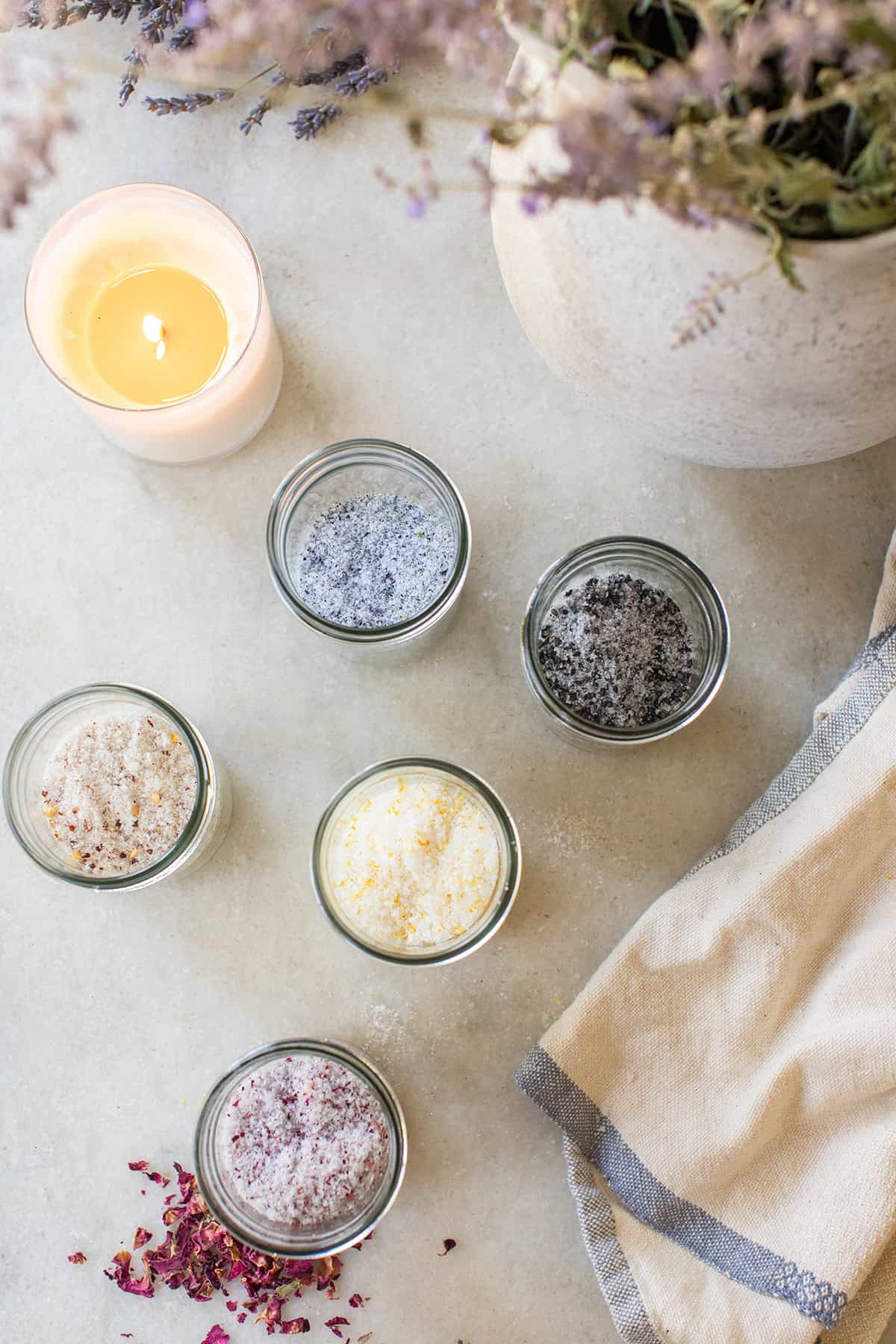
Lemon Zest Salt
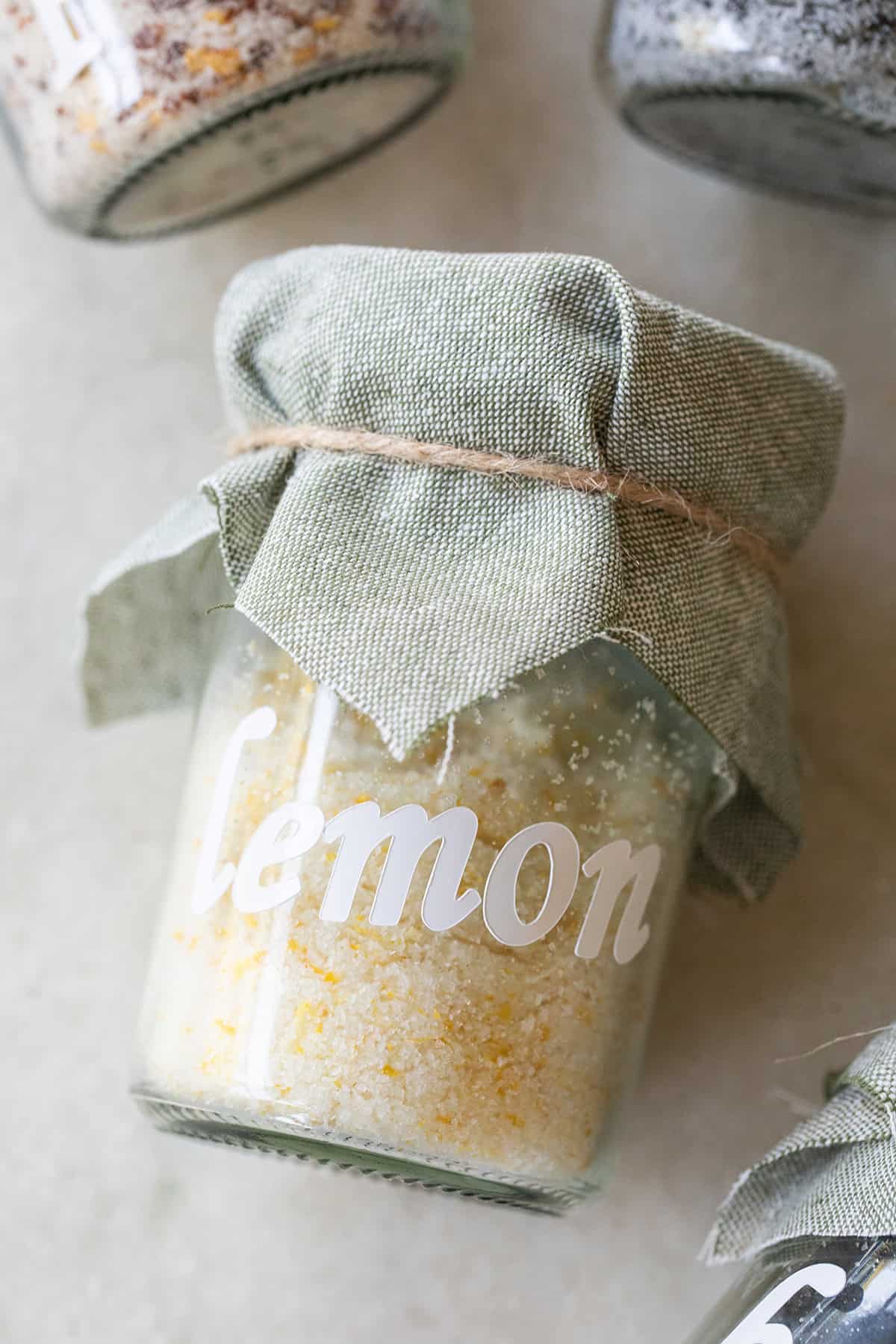
The one I reach for most. Bright, a little floral, and the most versatile of the five. Use it on roasted vegetables, fish, scrambled eggs, shortbread, or any citrus cocktail rim. If you only make one, make this one.
Rose Petal Salt
Dried rose petals turn the salt the softest pink with a floral note subtler than you’d expect. Beautiful on chocolate, on strawberries, on a pink cocktail rim, and scattered over a cheese board. This is the prettiest jar of the five.
Sesame Salt
Nutty, savory, and endlessly useful. Sprinkle it on avocado toast, rice, cucumbers, roasted sweet potatoes, or warm bread with good olive oil. My family goes through this one fastest.
Red Pepper Salt
Heat plus those little flecks of red, which look wonderful in a jar. Use it on grilled meats, pizza, eggs, roasted broccoli, or a spicy margarita rim. Go easy the first time, because it’s warmer than it looks.
Butterfly Pea Flower Salt
I’ll be honest about this one. Butterfly pea flowers are almost flavorless, mild, and faintly earthy, and that’s it. You’re not making this for the taste.
You’re making it because the pigments react to acid, so the moment this salt touches something sour, it shifts from blue to pink. Rim a glass, squeeze a lime over it, and watch. I use the same flowers in my lavender gin and tonic punch, and the color change never stops being fun at a party.
How to Use Flavored Salt
People make a jar and then aren’t sure what to do with it. The short answer is almost everything, but here’s where these really earn their place.
On cocktails. Rub a citrus wedge around the glass, dip it in the salt, and pour. Lemon salt on a margarita, rose on anything pink, butterfly pea on a citrus drink for the color change. My hibiscus margarita uses crushed hibiscus in the rim; it’s the same idea, and it works on a mocktail too.
On desserts. Rose salt on dark chocolate, lemon salt on shortbread, a pinch of red pepper salt on anything with chocolate and caramel in it. Try a little over warm caramel sauce and you’ll understand immediately.
On simple food that needs one good thing. Sliced tomatoes, a soft-boiled egg, avocado toast, fresh ricotta with olive oil and bread. Popcorn is maybe the best use of sesame salt there is.
On a board. Set a small dish on a cheese or dessert board and people will use it and then ask where you got it.
How to Package Flavored Salt for Gifts
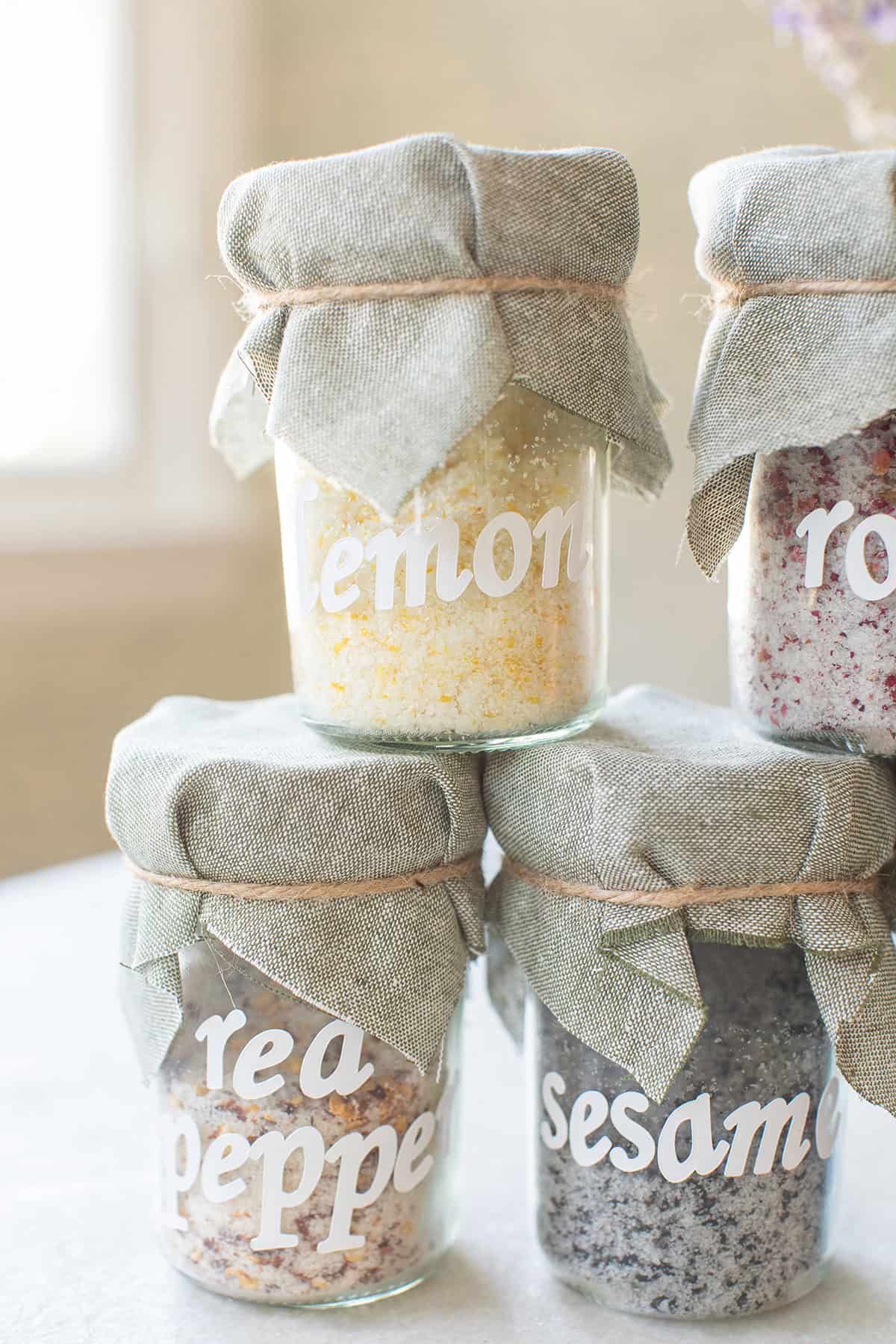
Use 6 to 7-ounce jars with a proper lid, and plain glass beats anything decorative because the salt is the pretty part. Add a label, tie a ribbon around the neck, then write two or three uses on the back of the tag. Most people have never been given a jar of flavored salt and won’t know where to start, and that one line is the difference between the jar getting used and the jar sitting there.
A set of three in a small box is a lovely holiday gift. Rose, lemon, and sesame is my trio, one pretty, one useful, one savory. I usually build a whole shelf of these in December alongside my infused sugar, dehydrated orange slices, gingerbread syrup, and mini gingerbread houses. Add a jar of caramel sauce and you have a gift basket you didn’t have to buy.
Eden’s Tips
Buy better salt than you think you need. This is the one ingredient in the jar and it’s the whole texture of the thing, so the difference between flaky Maldon and generic coarse salt is obvious the moment you sprinkle it.
Pulse, don’t blend. Two minutes of short pulses distributes the flavor without pulverizing your salt into powder. If it starts looking like sand, you’ve gone too far.
Let it sit a day before you decide whether it needs more. Flavor keeps developing overnight, and I’ve over-flavored plenty of jars by tasting too early and reaching for more zest.
Label everything the moment you jar it. Rose and butterfly pea are obvious, but lemon, sesame, and red pepper start looking suspiciously alike after a week on the shelf, and I have absolutely poured the wrong one on a cookie.
Make five at once. The work is in the setup and the cleanup, not the mixing, so five jars take barely longer than one. This is also how you end up with a gift shelf without ever planning one.
Flavored Salt FAQs
Flavored salt is salt that’s been mixed with dried herbs, spices, citrus zest, petals, or seeds so the salt picks up their aroma and color. It’s also called infused salt or finishing salt, and it’s used at the end of cooking rather than during, so the texture and flavor stay noticeable.
Coarse or flaky salt. Maldon, coarse sea salt, and kosher salt all work well because the larger crystals hold their shape and give you texture when you sprinkle. Fine table salt dissolves into whatever you put it on, which defeats the purpose.
It’s at its best for about six months in an airtight jar in a cool, dry place. The salt itself doesn’t spoil, so it stays safe well past that, but the flavor gradually fades as the oils in the herbs and zest dissipate.
Only if you dry them first. Fresh herbs carry enough moisture to make the salt clump, and a jar made with fresh herbs has to live in the refrigerator rather than the pantry. If you’re making these to give away, dry everything.
Moisture got in, almost always from an ingredient that wasn’t fully dried. Salt pulls water toward itself, so anything even slightly damp will do it. Dry your zest and herbs until they’re brittle, let them cool completely before mixing, and store the finished salt somewhere dry with the lid on tight.
Yes. Fresh zest is too wet and will clump the salt within days. Dry it at 200°F for about 20 minutes, keeping the temperature low so you don’t drive off the citrus oils and end up with something bitter.
It’s one of the best uses for it. Run a citrus wedge around the rim, dip it in the salt, and pour. Butterfly pea flower salt is the showstopper here because it turns pink when it hits anything acidic.
Mostly, yes. Finishing salt describes when you use it, at the end, sprinkled on top. Flavored salt describes what’s in it. Most flavored salts are finishing salts, and these five all are.
More Easy Homemade Gifts


If you make these flavored salts, I’d love it if you’d come back and leave a 5-star rating and a comment below. It helps other people find the recipe, and I read every one!
You can also FOLLOW ME on FACEBOOK, INSTAGRAM, and PINTEREST to see more delicious recipes, cocktails, desserts, and parties!
My new Entertaining book is here! Order Now!

How to Make Flavored Salt
Equipment
- 1 Food Processor
- 1 Microplane zester
- 1 Baking Sheet
- 5 Glass jars with lids 6-7 ounces
Ingredients
Lemon Salt
- 3/4 cup sea salt, coarse or flaky
- 4 tbsp lemon zest, dried
Rose Salt
- 3/4 cup sea salt, coarse
- 1 1/2 tbsp dried rose petals
Sesame Salt
- 3/4 cup sea salt, coarse or flaky
- 1 1/2 tbsp sesame seeds, toasted
Red Pepper Salt
- 3/4 cup sea salt , coarse or flaky
- 1 tbsp red pepper flakes, crushed
Butterfly Pea Flower Salt
- 3/4 cup sea salt, coarse or flaky
- 1 tbsp butterfly pea flowers, dried
Instructions
- If you're making the lemon zest salt, dry the zest first. Heat the oven to 200°F. Zest 4 lemons with a microplane, taking only the colored outer peel and leaving the white pith. Spread the 4 tablespoons of zest in a thin even layer on a parchment-lined baking sheet. Bake for 20 minutes, checking at 15 minutes, until brittle and still yellow. Let cool completely.
- Add 3/4 cup coarse sea salt and your dried flavoring to a food processor or blender. For lemon, use the dried zest from step 1. For rose, use 1 1/2 tablespoons dried rose petals. For sesame, use 1 1/2 tablespoons toasted sesame seeds. For red pepper, use 1 tablespoon crushed red pepper flakes. For butterfly pea flower, use 1 tablespoon dried butterfly pea flowers.
- Pulse in short bursts for about 2 minutes, until the color runs evenly through the salt. Stop while the salt still has visible flakes. If it starts looking like fine sand, you've gone too far.
- Transfer to a 6 to 7 ounce jar with a tight-fitting lid. Let it sit at least 24 hours before using, so the flavor settles into the salt.
- Store in a cool, dry place. Best before 6 months.
Video
Notes
Nutrition
Nutrition information is automatically calculated, so should only be used as an approximation.
















It’s “coarse”, not “course”.
I am hoping to make this for the holidays. After being made how long do they stay fresh? Thanks excited to try them out!!
Jennifer
These look delightful!!!! Can’t wait to experiment.