

This post may contain affiliate links. Please see our disclosure policy.
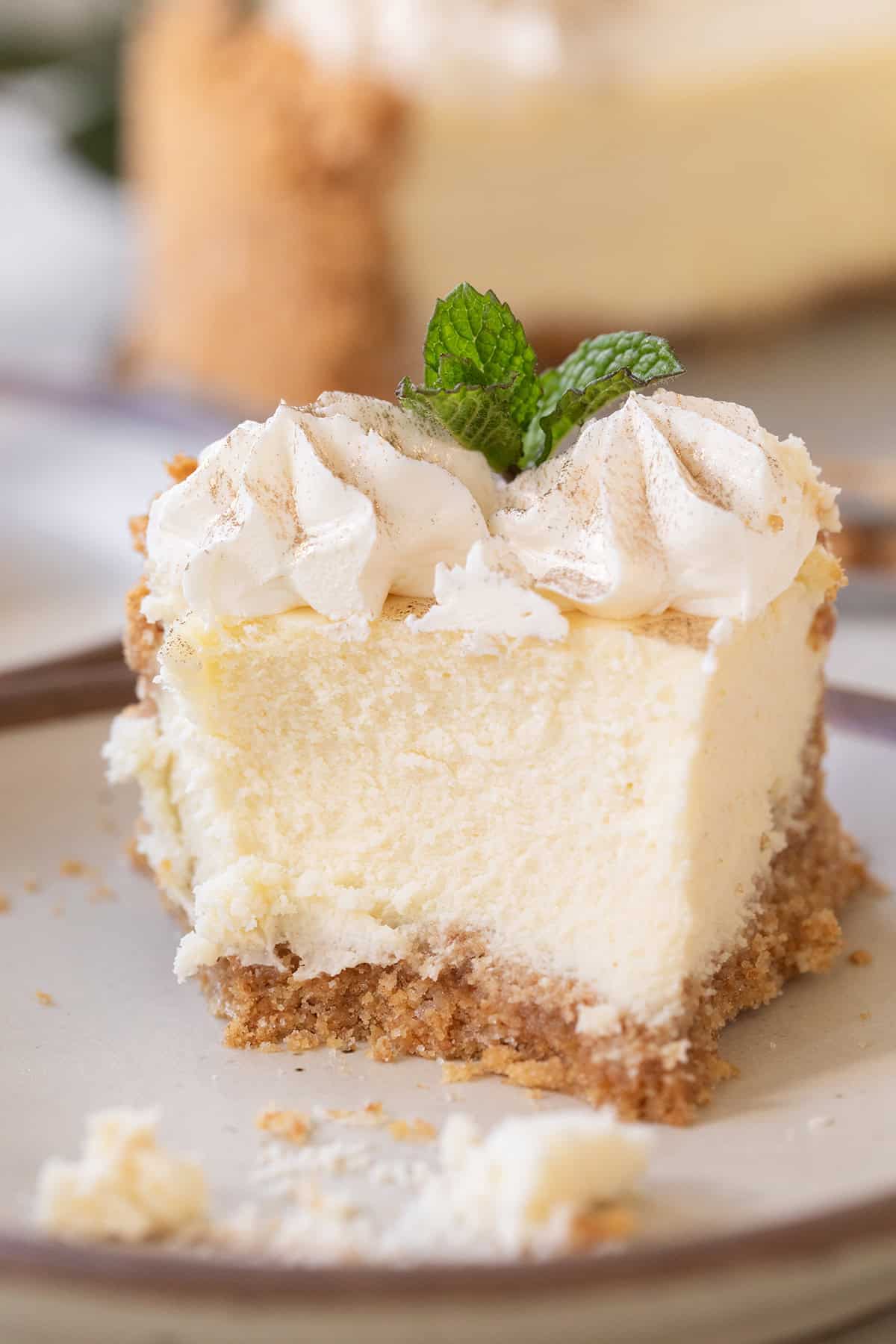
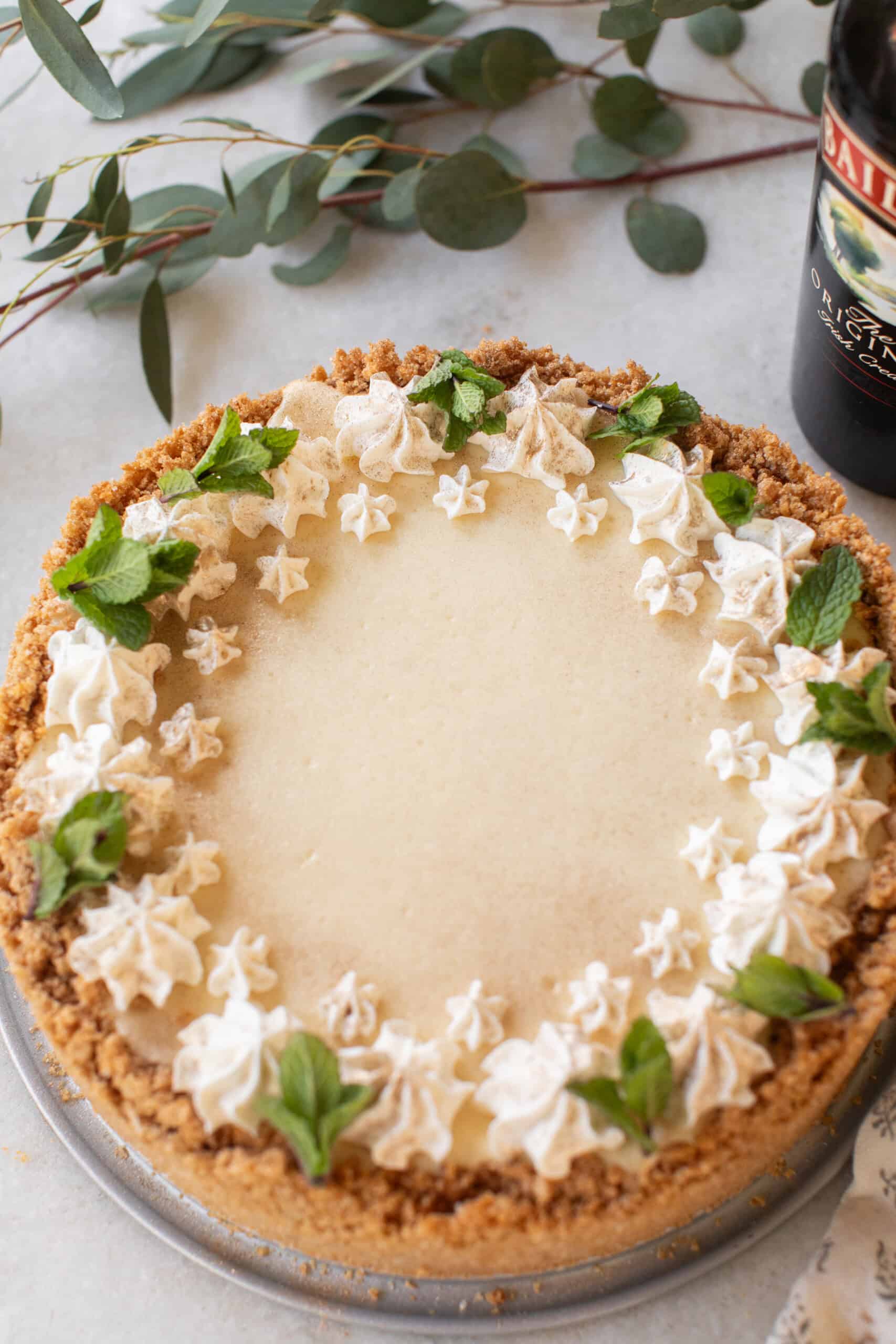
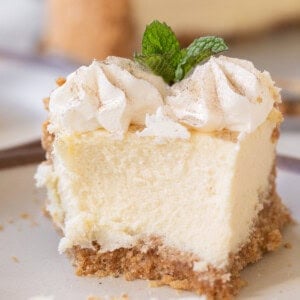
This Bailey’s Irish Cream cheesecake is rich, creamy, and full of smooth Irish cream flavor with a classic graham cracker crust. Baked low and slow in a water bath, it has the ultra-luxurious texture I look for in every cheesecake recipe I make.
This is the same dependable method I use for all of my baked cheesecakes, and it works every single time.
Pin this now to find it later
Pin ItI took my trusted, go-to cheesecake recipe and gave it a little Irish makeover, similar to how I build flavor into classics like my ricotta cheesecake, goat cheese cheesecake and no-bake cheesecake.
The Bailey’s adds depth without overpowering the cream cheese, and it’s become one of my favorite cheesecakes to make. I make it every year for St. Patrick’s Day!
Why This Bailey’s Cheesecake Works
If you’ve ever been nervous about baking cheesecake, this recipe walks you through every step and uses the same no-fail method I rely on for all of my baked cheesecakes.
- Ultra-creamy texture thanks to room-temperature ingredients
- Smooth Irish cream flavor that’s rich but balanced
- Classic graham cracker crust that holds together perfectly
- Baked in a water bath for a crack-free top
- Reliable, tested method I use for all my cheesecakes
This follows the same technique I use in my classic baked cheesecake, pumpkin cheesecake and my sprinkle cheesecake, just with a boozy twist!
Bailey’s Irish Cream Cheesecake Ingredients
Graham Cracker Crust
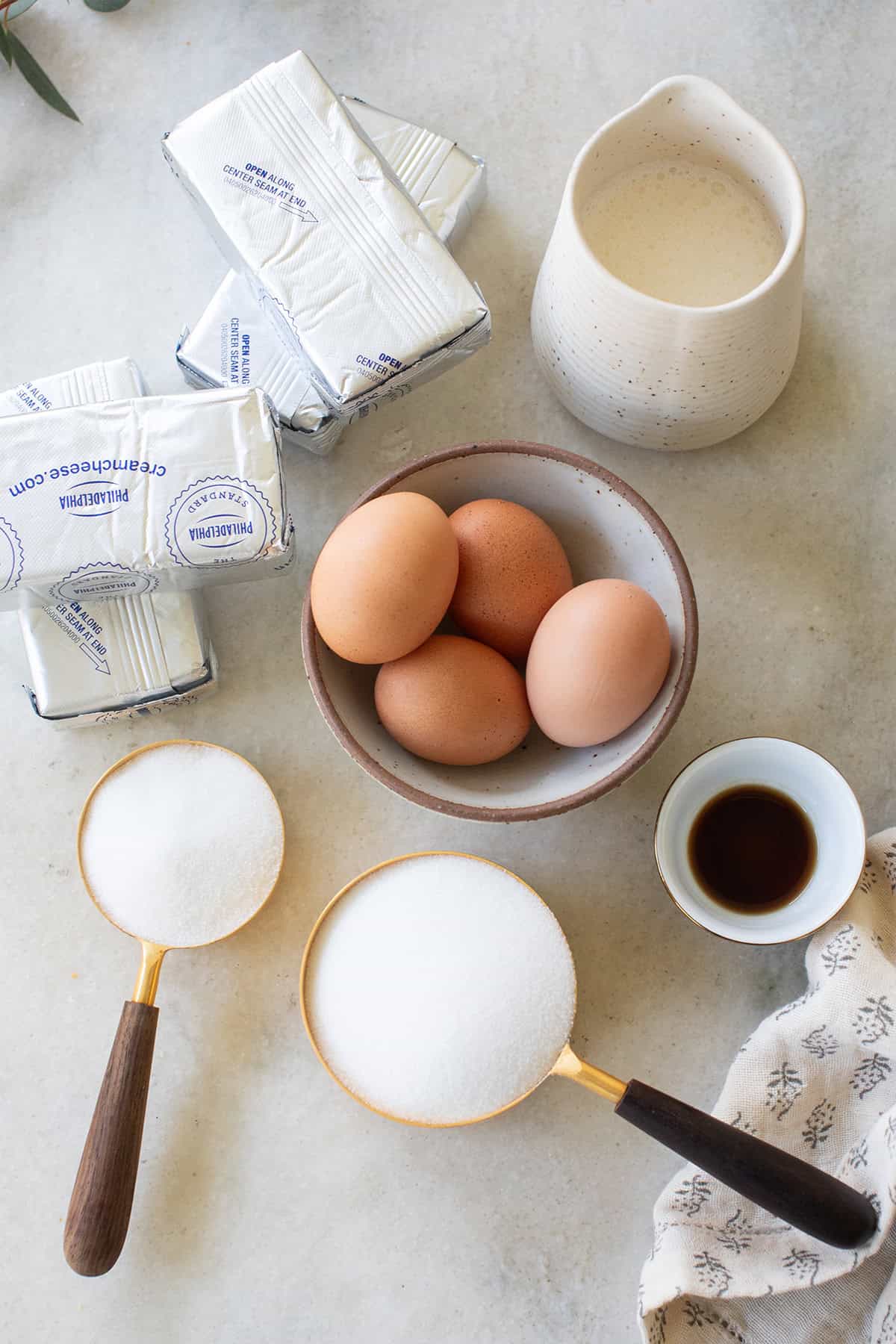
- Graham cracker crumbs: I use finely crushed graham crackers, just like in my graham cracker crust recipes.
- Unsalted butter, melted: Holds the crust together and adds richness.
- Granulated sugar: Adds just enough sweetness without overpowering.
Cheesecake Filling
- Cream cheese (room temperature): This is non-negotiable for a smooth cheesecake, the same rule I follow in my ricotta cheesecake.
- Granulated sugar: Sweetens the filling without making it too heavy.
- Large eggs (room temperature): Helps create a creamy, cohesive texture.
- Vanilla extract: Enhances the Bailey’s flavor.
- Heavy cream: Adds richness and silkiness.
- Bailey’s Irish Cream: The star ingredient. Smooth, creamy, and perfect for dessert.
If you love Bailey’s desserts, this pairs beautifully with my Sicilian Kiss!
How to Make A Bailey’s Irish Cream Cheesecake
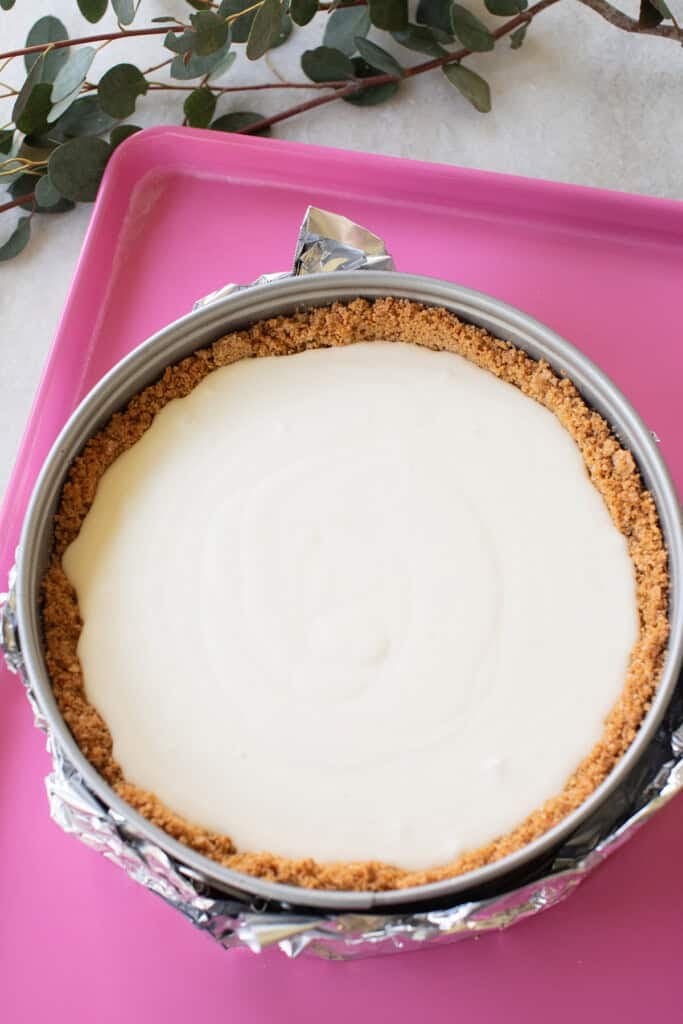
Make the Graham Cracker Crust
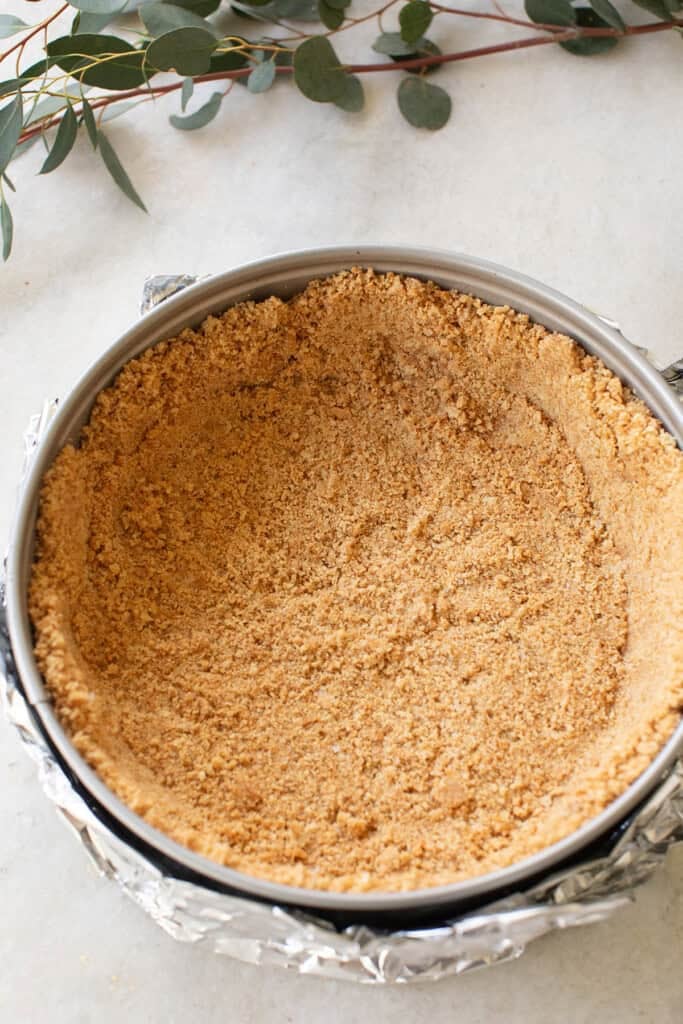
Mix graham cracker crumbs, sugar, and salt, then stir in melted butter until combined. Press the mixture evenly into a buttered springform pan and wrap the outside tightly with foil to prep for the water bath.
Bake at 350°F for 10 minutes, then set aside to cool. This is the same crust method I use for my cheesecake bars and other graham cracker crust desserts.
Make the Bailey’s Cheesecake Filling
Lower the oven to 325°F and bring a kettle of water to a boil.
With the mixer on medium, beat the room-temperature cream cheese until light and fluffy, about 4 minutes. Scrape the bowl really well so there are no lumps hiding.
Add the sugar: Add the sugar and salt and continue mixing until smooth and creamy.
Mix in the eggs and flavor: With the mixer running, add the vanilla, then the eggs one at a time, mixing fully after each. Lower the speed and slowly mix in the heavy cream and Bailey’s Irish Cream.
Pour and prep the water bath: Pour the filling over the baked crust. Place the foil-wrapped springform pan into a large roasting pan and carefully pour boiling water around it, halfway up the sides.
Bake: Bake at 325°F for 1 hour, until the top is lightly golden and the center still has a gentle jiggle.
Cool slowly: Turn the oven off, prop the door open with a wooden spoon, and let the cheesecake rest inside for another hour. This step makes all the difference.
Chill: Remove from the oven, cool at room temperature, then refrigerate for at least 4 hours or overnight before serving.
This slow bake-and-rest method is exactly how I avoid cracks in cheesecakes like my ricotta cheesecake and other baked cheesecake recipes.

Eden’s Cheesecake Tips
Room-temperature cream cheese is essential
Cold cream cheese leads to lumps. If needed, unwrap and microwave for 1 minute, just like I do when making my classic cheesecake recipes.
Always use a springform pan
It’s the only way to remove and serve a cheesecake cleanly.
Don’t skip the water bath
This creates a moist, creamy texture and prevents cracking.
Add the water after placing the pan in the oven
This avoids moving hot water and makes the process safer.
Plan ahead
Cheesecake needs time to rest and chill, just like my make-ahead desserts.
FAQs
The Bailey’s adds a smooth Irish cream flavor without tasting boozy. It blends right into the cream cheese and gives the cheesecake depth rather than a strong alcohol bite.
Yes. Baking this cheesecake in a water bath helps it bake evenly and prevents cracks. It’s the same method I use for my baked cheesecakes like my ricotta cheesecake. It’s very easy, I promise!
Absolutely. Cheesecake is best made a day ahead so it has plenty of time to chill and set. I usually make it the night before serving.
Stored covered in the refrigerator, this cheesecake will keep well for up to 4–5 days, but don’t be surprised if it disappears much sooner!
Yes. Once fully chilled, wrap the cheesecake tightly and freeze for up to 2 months. Thaw overnight in the refrigerator before serving.
More Cheesecake Recipes

Cakes & Cupcakes
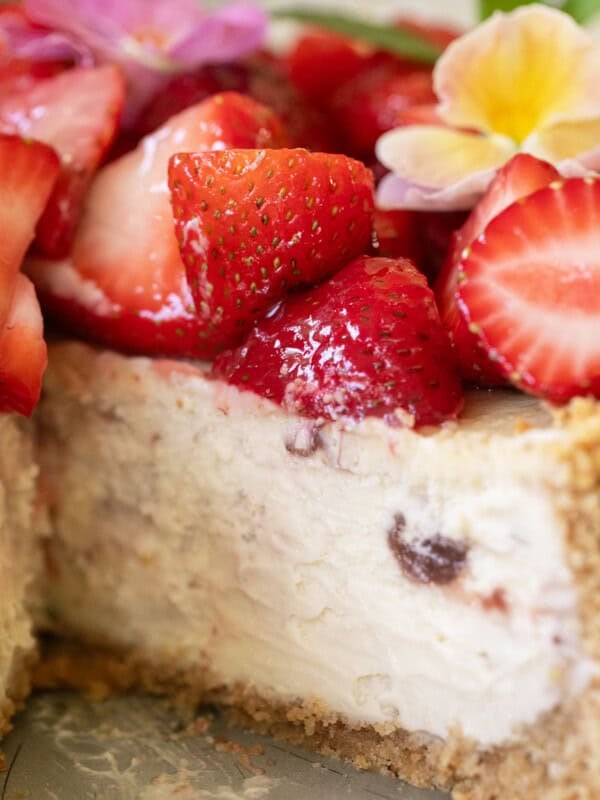
Strawberry Cheesecake Recipe
Cakes & Cupcakes
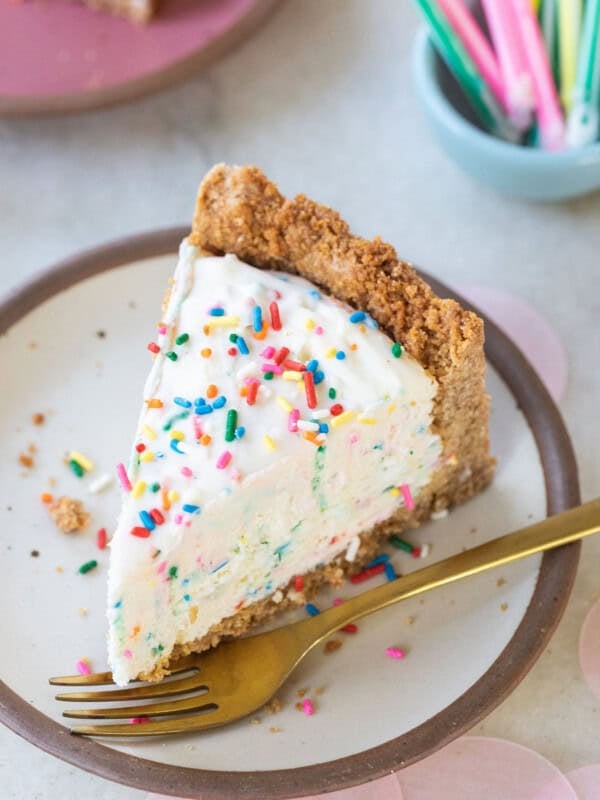
No Bake Funfetti Cheesecake

Thanksgiving
Pumpkin Cheesecake Truffles
I love serving this for St. Patrick’s Day, dinner parties, or anytime I want a dessert that feels special without being fussy.
If you try it, leave a comment and review below, I’d love to know how it turned out!
My new Entertaining book is here! Order Now!
Bailey’s Irish Cream Cheesecake
Ingredients
Graham Cracker Crust
- 3 cups graham cracker crumbs
- 6 tbsp unsalted butter
- 6 tbsp granulated sugar
- 1 tsp salt
Cheesecake Filling
- 32 ounces cream cheese, room temp, super soft.
- 1 1/3 cups granulated sugar
- 1/2 tsp salt
- 4 large eggs, room temp.
- 2 tsp vanilla extract
- 1 1/4 cup heavy whipping cream
- 1/4 cup Bailey's Irish Cream
Instructions
- Preheat the oven to 350°F.
- In a medium bowl, mix together the graham cracker crumbs, sugar, and salt.
- Add the melted butter and stir until the mixture resembles wet sand.
- Press the crust firmly into the bottom of a buttered 9-inch springform pan, creating an even layer.
- Wrap the outside of the pan tightly with foil, covering the bottom and coming up the sides to prepare for the water bath.
- Bake the crust for 10 minutes, then remove from the oven and set aside to cool.
- Reduce oven temperature to 325°F.
- Bring a kettle of water to a boil for the water bath and set aside.
- In a large mixing bowl, beat the cream cheese on medium speed for about 4 minutes, until completely smooth and fluffy. Scrape down the sides and bottom of the bowl well.
- Add the sugar and salt and continue mixing for another 3–4 minutes, until smooth and creamy.
- Add the vanilla extract.
- Add the eggs one at a time, mixing fully after each addition and scraping the bowl as needed.
- Reduce the mixer speed to low and slowly pour in the heavy cream and Bailey’s Irish Cream, mixing just until combined. Do not overmix.
- Pour the cheesecake batter over the cooled crust, smoothing the top.
- Place the foil-wrapped springform pan into a large roasting pan.
- Carefully pour the boiling water into the roasting pan until it reaches about halfway up the sides of the springform pan.
- Transfer to the oven and bake at 325°F for 1 hour, until the edges are set and the center has a slight jiggle.
- Turn the oven off, prop the oven door open with a wooden spoon, and let the cheesecake rest in the oven for 1 hour.
- Remove the cheesecake from the oven and water bath.
- Let cool completely at room temperature.
- Cover and refrigerate for at least 4 hours or overnight before slicing and serving.
Video
Notes
- Cream cheese must be fully softened to avoid lumps.
- Always use a springform pan for clean removal.
- The water bath is essential for a smooth, crack-free cheesecake.
- Cheesecake tastes best the next day after fully chilling.
Nutrition
Nutrition information is automatically calculated, so should only be used as an approximation.















Hello. I noticed in your pics that the Graham cracked crumbs comes up the side of the pan. Your instructions says to line the bottom with crumbs. Can I add crumbs up the side of the pan before adding the mixture?
Yes you can! You can do either; it depends on the pie dish, but most likely you’ll have enough to line the pan.
My favorite cheesecake! Super moist, so good!